Brixadi vs. Vivitrol: Buprenorphine vs. Naltrexone Injections
Brixadi and Vivitrol are both long-acting injections for opioid use disorder. They work in opposite ways and start very differently.
Written by Benjamin Zohar, NCACIP · Edited by Ezra Zohar, M.S. Ed. · Published · Updated · Medically reviewed by Brandon McNally, RN on
Quick answer
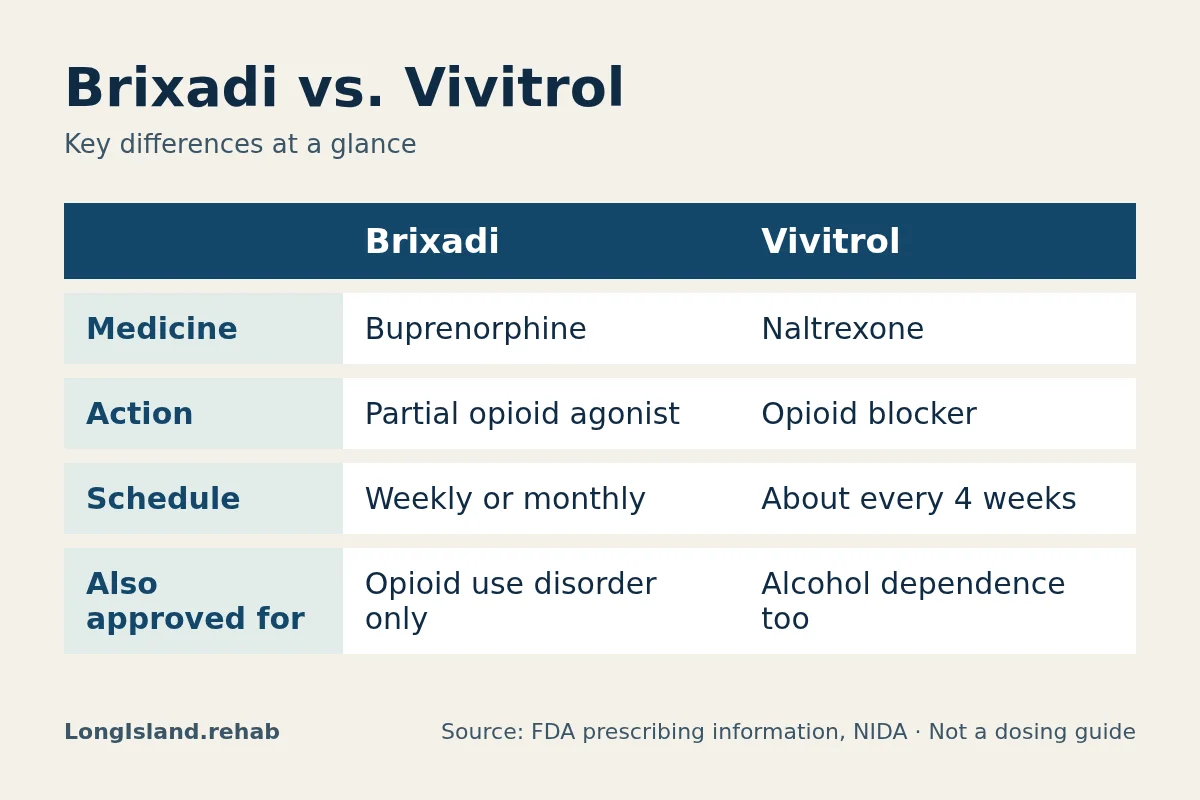
Brixadi delivers buprenorphine, a partial opioid agonist, weekly or monthly. Vivitrol delivers naltrexone, an opioid blocker, about every 4 weeks. Vivitrol needs an opioid-free period first. Brixadi can be started after a single test dose of buprenorphine, per its FDA label.
- Brixadi = buprenorphine (partial agonist). Vivitrol = naltrexone (blocker).
- Brixadi offers weekly or monthly options.
- Vivitrol requires an opioid-free window, usually 7–10 days.
- Vivitrol is also approved for alcohol dependence.
Brixadi vs. Vivitrol at a glance
| Feature | Brixadi | Vivitrol |
|---|---|---|
| Ingredient | Buprenorphine extended-release | Naltrexone extended-release |
| How it works | Partial agonist | Antagonist |
| Schedule | Weekly or monthly | About every 4 weeks |
| Injection | Subcutaneous | Intramuscular (buttock) |
| Starting | After buprenorphine test dose or on existing buprenorphine | After opioid-free period |
| Approved uses | Moderate to severe OUD | Opioid dependence and alcohol dependence |
Based on current FDA prescribing information. Labels change; your prescriber follows the latest version.
Different starting paths
For many people, the biggest difference is the start. Brixadi does not require full detox. Vivitrol does, because naltrexone can trigger sudden withdrawal.
For people leaving jail, a hospital or residential care already opioid-free, Vivitrol may be easier to begin. A prescriber weighs this.
Safety notes
Brixadi carries a boxed warning about serious harm if injected into a vein. It is only given in certified healthcare settings.
After Vivitrol wears off, tolerance may be low. Opioid use then carries higher overdose risk.
Side effects and safety
- Vivitrol started too soon after opioids can cause sudden, severe withdrawal.
- When Vivitrol wears off or is stopped, lower tolerance raises overdose risk if opioids are used.
- Brixadi carries a boxed warning about serious harm if injected into a vein and is only given in certified settings.
- Brixadi can cause injection-site pain, redness or swelling. Vivitrol can cause buttock-muscle injection reactions and the label warns about liver effects.
Questions about switching to ask a clinician
Switching between these medications should only be planned with a prescriber. These questions can help that conversation.
- How long after my last Brixadi dose could naltrexone be considered?
- Would a weekly Brixadi schedule make a later switch easier to time?
- If I also drink alcohol, how does that change which medicine fits?
- What support is in place if cravings increase during a switch?
Insurance and access
- Ask whether the office can begin Brixadi the same week as your visit, since no opioid-free period is needed.
- If you are leaving a jail, hospital or residential program, ask whether Vivitrol can be given before release.
- Ask your plan about prior authorization for each injection, and whether alcohol use disorder changes coverage for Vivitrol.
Finding care on Long Island
Across Nassau and Suffolk counties, office-based buprenorphine prescribers are more common than clinics offering injectables. Methadone for opioid use disorder is only available through certified opioid treatment programs.
- Ask directly: "Do you offer Brixadi and Vivitrol, and do you keep them in stock?"
- First visit: ask what the assessment includes and how soon medication can start.
- Insurance: call the number on your card and ask about prior authorization before the first dose.
- Scheduling: ask how often visits happen in the first month and later.
- Continuity: ask who to call between visits, and what happens if you move or change plans.
New York State lists certified programs through the OASAS provider directory.
Appointment checklist
Bring these to your first visit:
- A list of every medicine and supplement you take, including doses.
- Your recent substance use, including the last time you used opioids.
- Your insurance card and any prior authorization paperwork.
- Questions about the schedule, side effects and what to do if you miss a visit.
- Contact details for any other doctors involved in your care.
Evidence and uncertainty
FDA-approved medications for opioid use disorder are strongly supported by research, according to NIDA. Direct head-to-head trials between specific long-acting products are limited. Choices depend on history, goals, other health conditions and access.
Frequently Asked Questions
Get answers to common questions about our 24/7 crisis helpline and addiction support services.
Still have questions? Our crisis counselors are available 24/7.
Call 844-338-6969Sources and editorial information
- FDA: Brixadi (buprenorphine extended-release) prescribing information
- FDA: Vivitrol (naltrexone extended-release) prescribing information
- Lee JD et al. X:BOT trial, The Lancet (2018) — extended-release naltrexone vs buprenorphine-naloxone
- NIDA: Medications to Treat Opioid Use Disorder research report
- NIH StatPearls: Naltrexone
Written by Benjamin Zohar, NCACIP, and edited by Ezra Zohar, M.S. Ed. Medically reviewed by Brandon McNally, RN. See our editorial guidelines.
Medical disclaimer: This article is for education only and is not medical advice. Long Island Rehab Helpline is an independent treatment-navigation resource, not a treatment provider. Talk with a licensed prescriber about your situation.
Questions about medication options?
If you would like help finding licensed providers on Long Island that offer these medications, you can explore MAT options or talk with a treatment navigator at (844) 338-6969.