Brixadi vs. Suboxone: Weekly or Monthly Shot vs. Daily Film
Brixadi and Suboxone both treat opioid use disorder with buprenorphine. One is a clinic-given injection. The other is a daily film you take at home.
Written by Benjamin Zohar, NCACIP · Edited by Ezra Zohar, M.S. Ed. · Published · Updated · Medically reviewed by Brandon McNally, RN on
Quick answer
Suboxone is a daily sublingual film of buprenorphine plus naloxone. Brixadi is an extended-release buprenorphine injection given weekly or monthly by a healthcare professional. Per its label, Brixadi can be started after a single test dose of transmucosal buprenorphine or in people already on it.
- Same core medicine, different delivery.
- Brixadi comes in weekly and monthly strengths.
- Suboxone contains naloxone; Brixadi does not.
- Brixadi is only given in certified healthcare settings.
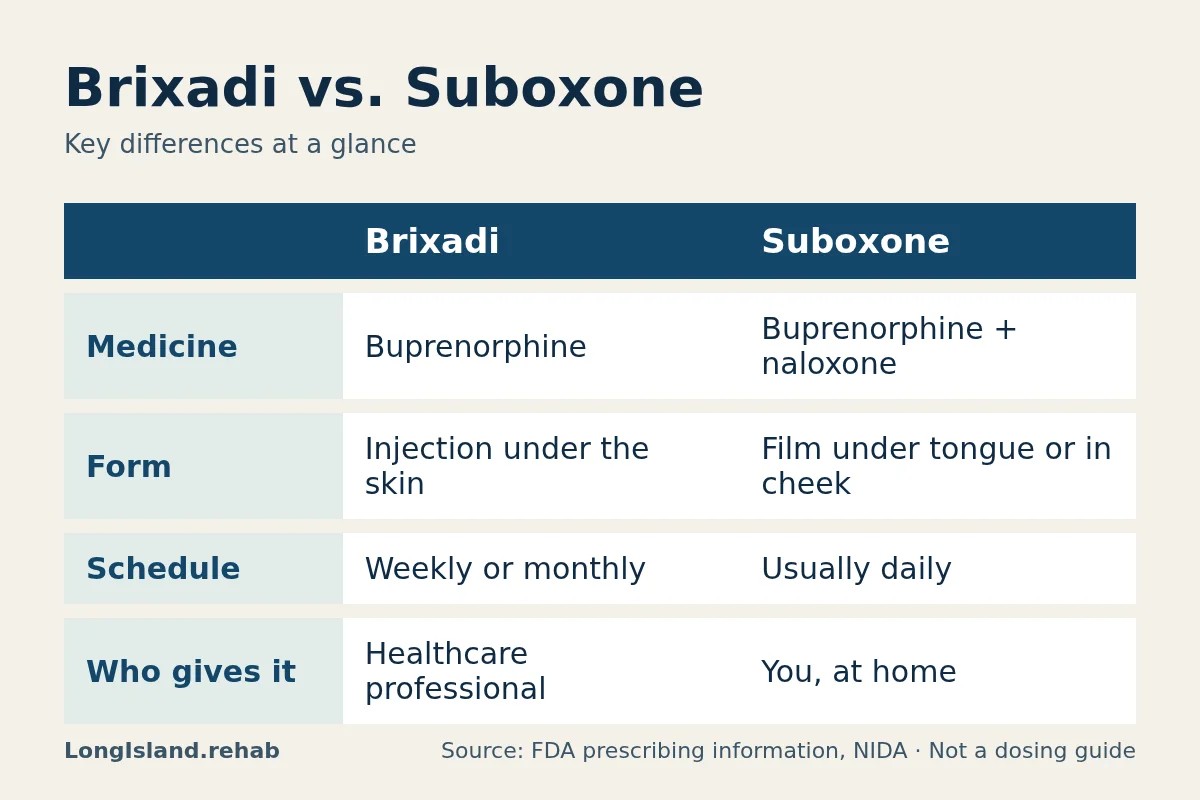
Brixadi vs. Suboxone at a glance
| Feature | Brixadi | Suboxone |
|---|---|---|
| Ingredients | Buprenorphine only | Buprenorphine + naloxone |
| Form | Subcutaneous injection | Sublingual or buccal film |
| How often | Weekly or monthly | Usually daily |
| Injection sites | Buttock, thigh, abdomen or upper arm (per label) | Not applicable |
| Who gives it | Healthcare professional | Patient at home |
Based on current FDA prescribing information. Labels change; your prescriber follows the latest version.
Why some people move to Brixadi
Weekly or monthly dosing removes the need to remember a daily dose. It also means no medication kept at home.
Others prefer daily film for flexibility and fewer clinic visits. Neither choice is wrong.
Access and coverage
Fewer Long Island offices offer Brixadi than daily buprenorphine. Insurance plans may require prior authorization for injectables.
Side effects and safety
- Both contain buprenorphine. Mixing with benzodiazepines, alcohol or sedatives raises breathing risks.
- Suboxone films kept at home need safe storage. Brixadi has no take-home supply.
- Brixadi can cause injection-site pain, redness or itching. Rotating sites is part of the label.
- Brixadi carries a boxed warning about serious harm if injected into a vein.
Questions about switching to ask a clinician
Switching between these medications should only be planned with a prescriber. These questions can help that conversation.
- Would I start Brixadi weekly or monthly, given my current film dose?
- Can I start Brixadi after one test dose instead of weeks on films?
- What should I do if I feel withdrawal between shots?
- How would I return to daily films if the injection is not a good fit?
Insurance and access
- Daily films are prescribed in many offices. Fewer Long Island offices give Brixadi, which needs a certified setting.
- Ask whether the office keeps Brixadi in stock or orders it through a specialty pharmacy.
- Ask your plan whether Brixadi needs prior authorization, and whether it is covered under pharmacy or medical benefits.
Finding care on Long Island
Across Nassau and Suffolk counties, office-based buprenorphine prescribers are more common than clinics offering injectables. Methadone for opioid use disorder is only available through certified opioid treatment programs.
- Ask directly: "Do you offer Brixadi and Suboxone, and do you keep them in stock?"
- First visit: ask what the assessment includes and how soon medication can start.
- Insurance: call the number on your card and ask about prior authorization before the first dose.
- Scheduling: ask how often visits happen in the first month and later.
- Continuity: ask who to call between visits, and what happens if you move or change plans.
New York State lists certified programs through the OASAS provider directory.
Appointment checklist
Bring these to your first visit:
- A list of every medicine and supplement you take, including doses.
- Your recent substance use, including the last time you used opioids.
- Your insurance card and any prior authorization paperwork.
- Questions about the schedule, side effects and what to do if you miss a visit.
- Contact details for any other doctors involved in your care.
Evidence and uncertainty
FDA-approved medications for opioid use disorder are strongly supported by research, according to NIDA. Direct head-to-head trials between specific long-acting products are limited. Choices depend on history, goals, other health conditions and access.
Frequently Asked Questions
Get answers to common questions about our 24/7 crisis helpline and addiction support services.
Still have questions? Our crisis counselors are available 24/7.
Call 844-338-6969Sources and editorial information
- FDA: Brixadi (buprenorphine extended-release) prescribing information
- FDA: Information about Medications for Opioid Use Disorder (MOUD)
- DEA Diversion Control: Elimination of the DATA-Waiver requirement
- NIH StatPearls: Buprenorphine
- Lofwall MR et al. JAMA Internal Medicine (2018) — weekly and monthly subcutaneous buprenorphine vs daily sublingual buprenorphine-naloxone
Written by Benjamin Zohar, NCACIP, and edited by Ezra Zohar, M.S. Ed. Medically reviewed by Brandon McNally, RN. See our editorial guidelines.
Medical disclaimer: This article is for education only and is not medical advice. Long Island Rehab Helpline is an independent treatment-navigation resource, not a treatment provider. Talk with a licensed prescriber about your situation.
Questions about medication options?
If you would like help finding licensed providers on Long Island that offer these medications, you can explore MAT options or talk with a treatment navigator at (844) 338-6969.