AA vs. Alcohol Rehab: Understanding Your Support Options
AA and professional treatment serve different purposes. You can explore both without treating them as competing choices. The right care plan depends on an individual assessment, not a website checklist.
Editorial draft prepared November 5, 2026. Author attribution and medical review are pending confirmation; no review is claimed.
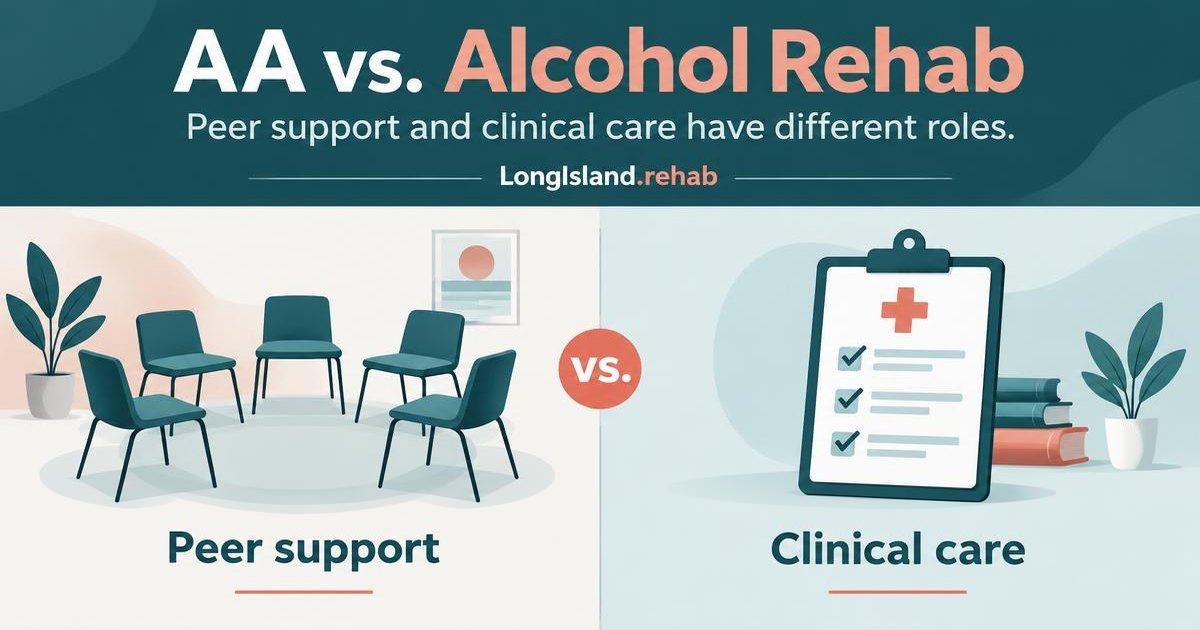
Compare the roles
| Option | Main role | What to clarify |
|---|---|---|
| AA fellowship | Peer connection and shared recovery experience | Meeting format and local contact |
| Professional treatment | Clinical assessment and treatment planning | Credentials, services, setting, fees, and insurance |
| Withdrawal care | Medical evaluation and management when indicated | Safety needs and appropriate clinical setting |
| LongIsland.rehab navigation | Information about providers, options, and insurance questions | Who provides care and any relevant relationships |
What professional care can include
Alcohol treatment can involve behavioral treatment, medication, and different care settings. Residential rehab is one option, not a requirement for everyone. A clinician can help assess needs and discuss suitable services. See NIAAA’s guide to finding alcohol treatment for an overview.
When withdrawal is a concern
Stopping after prolonged heavy drinking can cause dangerous withdrawal. Seek medical help to plan a safe next step rather than relying on an AA meeting or a navigation phone call to manage withdrawal. This guide does not provide a home detox plan. For an immediate medical emergency, call 911.
Can AA fit alongside treatment?
Mutual support may be one part of an ongoing recovery plan. Professional care can address clinical concerns that fellowship is not designed to manage. Talk with your treating professional about how meetings might fit your preferences and needs; do not change prescribed treatment based on advice from a nonclinical group member.
Questions to ask a treatment provider
- What assessment happens before admission?
- Which services are actually delivered at this location?
- Who will provide clinical care?
- How are medication and mental health needs addressed?
- What costs and insurance requirements should I verify?
- How is continuing care planned?
Where LongIsland.rehab fits
Clinical care, evidence, and individual needs
Meeting preferences and recovery needs differ. A meeting cannot determine a diagnosis, withdrawal risk, treatment setting, or insurance coverage.
For medical questions, review medical detox and withdrawal assessment and discuss care with a licensed clinician. Treatment insurance resources explain questions to verify with your plan and provider.
For another peer-support approach, explore SMART Recovery resources in New York.
Plan your next peer-support step
For local access, check the Long Island AA meeting directories or the 62-county New York AA directory. Official Nassau and Suffolk AA contacts can help explain fellowship listings.
Read what happens at a first AA meeting and explore online and telephone AA participation. Families can find Al-Anon and Alateen support resources. Our comparison of AA and professional alcohol care explains their different roles.
AA meeting and care questions
Meeting participation, practical preparation, and the distinction between fellowship and medical care.
Sources and official resources
- NIAAA — Treatment for Alcohol Problems
- NIAAA — Planning a Safe Change
- Nassau Intergroup — Scope of AA Support
- AA: Information about meetings
- MedlinePlus: Alcohol withdrawal
Educational information, not individualized medical advice. Verify meeting details with the listing organization. For a mental health crisis, call 988.
Related AA and family support guides
This website is an independent community resource and is neither approved nor endorsed by Alcoholics Anonymous World Services, Inc. We provide links to official AA Intergroup websites and resources. Alcoholics Anonymous®, AA®, and The Big Book® are registered trademarks of A.A. World Services, Inc.
Explore treatment resources on Long Island
For help finding clinical treatment or detox resources, contact the Long Island Rehab Helpline. This number is separate from AA and Al-Anon. Confirm medical needs with a licensed clinician.
Call (844) DETOXNY